
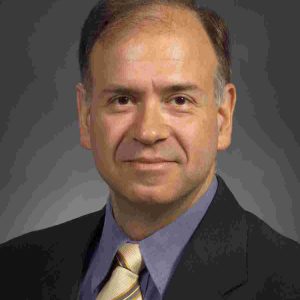
Nicholas Leventis
Nicholas research’s interests include sol-gel materials, magnetic effects on electrochemical systems, organic electrochemistry, intramolecular photo-induced charge and electron transfer and conducting polymers and composites.
Read More
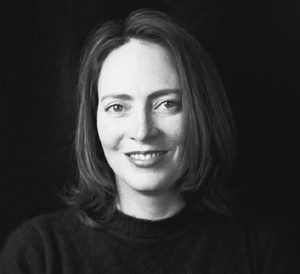
Pattie Maes
Pattie Maes is the Alexander W. Dreyfoos (1954) Professor in MIT’s Program in Media Arts and Sciences and associate head of the Program in Media Arts and Sciences. She founded and directs the Media Lab’s Fluid Interfaces research group. Previously, she founded and ran the Software Agents group. Prior to joining the Media Lab, Maes
Read More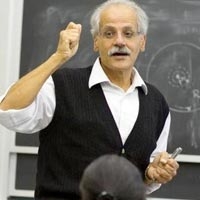
Ahmed Ghoniem
High performance computing in turbulent reactive flow Computational mathematics Combustion dynamics and active control Modeling and simulation of transport-chemistry interactions in thermochemical and electrochemical systems including high temperature fuel cells Gasification processes and fuel production Analysis of high-performance, zero-emission integrated energy systems with CO2 capture
Read More

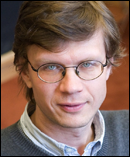
Mikhail Lukin
Mikhail Lukin’s research is in the areas of quantum optics and atomic physics. The emphasis is on studies of quantum systems consisting of interacting photons, atoms, molecules and electrons coupled to realistic environments. We are developing new techniques for controlling the quantum dynamics of such systems, and studying fundamental physical phenomena associated with them. These
Read More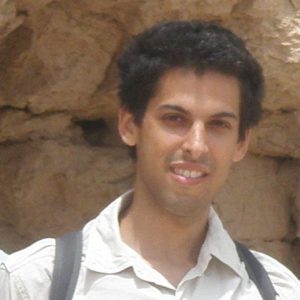
Lionel Levine
The broad goal of my research is to understand how and why large-scale forms and complex patterns emerge from simple local rules. My approach is to analyze mathematical models that isolate just one or a few features of pattern formation. A good model is one that captures some aspect of “scaling up” from local to
Read More